Blog

  • How to buy Bitcoin step by step: a guide to get started in 2026

    How to buy Bitcoin step by step: a guide to get started in 2026

    Buying Bitcoin for the first time feels like a maze: exchanges, verification, wallets, keys, fees. The good news is that the process is simpler than it looks, and you can do it in an afternoon. This guide walks you through every step, from choosing the platform to storing your bitcoin safely.

    Step 1: Choose an exchange

    An exchange is a platform where you buy and sell cryptocurrencies. For a first purchase, look for one that is regulated in your country, has been operating for years and offers a simple interface. The most popular global options include Coinbase, Kraken and Binance, among others.

    What matters more than the brand: regulation (is it supervised by a financial authority?), reputation (how long has it been operating and what is its track record?) and fees (what does it charge for buying, selling and withdrawing?). Avoid obscure platforms that promise zero fees: they often earn it back somewhere worse.

    Step 2: Create an account and verify your identity

    Exchanges are required by law to identify their customers (KYC). You will need your ID document, a phone number and sometimes a proof of address. Verification usually takes minutes, though it can take longer in some cases.

    This step annoys many people, but it is normal and non-negotiable: no legitimate exchange will let you buy without it. It is also your first protection — a regulated platform knows who you are and can help you if something goes wrong.

    Step 3: Buy bitcoin

    Once verified, you can deposit money with a bank transfer or card and buy bitcoin. The process is usually as simple as entering the amount and confirming. Two tips for beginners:

    • Start small: buy an amount you are comfortable with. Bitcoin is volatile and you are learning.
    • Use recurring purchases if you want to dollar-cost average: buying the same amount every week smooths out the price swings and removes the stress of timing the market.

    Step 4: Move your bitcoin to your own wallet

    This is the step most guides skip, and it is the most important one. Bitcoin kept on an exchange is not really yours in a practical sense: the platform holds the keys. If the exchange is hacked or freezes withdrawals, your bitcoin can be stuck or lost.

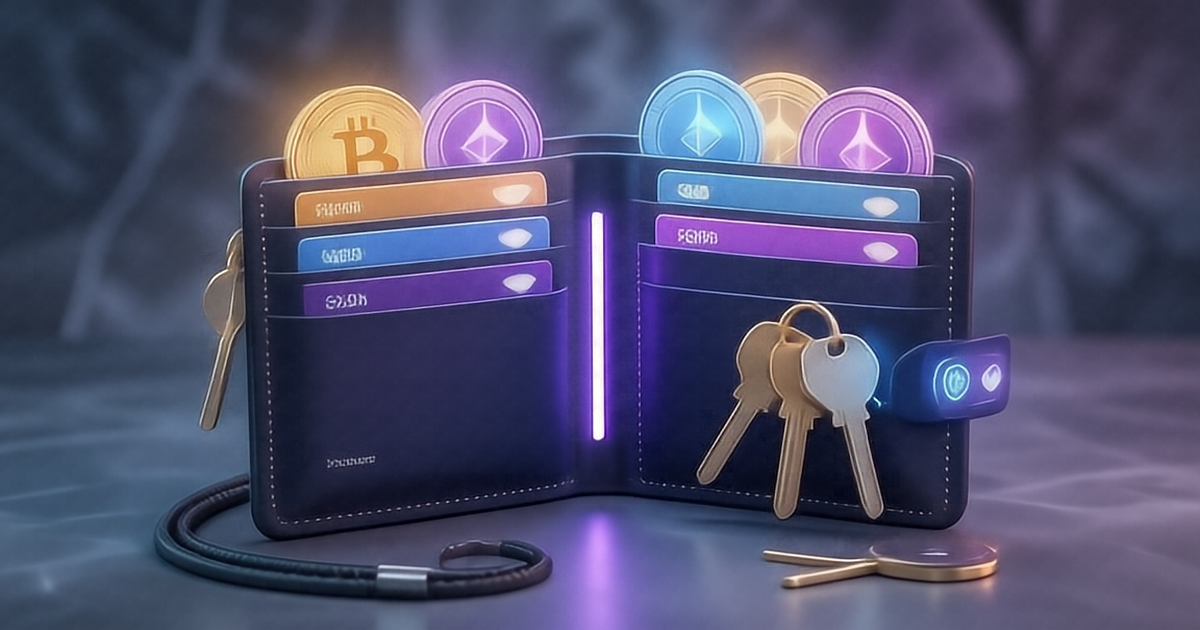
    A wallet is software or hardware that stores your private keys — the password that proves the bitcoin is yours. For amounts you plan to hold, a hardware wallet (a physical device like a USB stick) is the safest option. For small amounts, a reputable software wallet is fine.

    The rule of thumb: not your keys, not your coins. If you do not control the private keys, you do not really control the bitcoin.

    Step 5: Keep your recovery phrase safe

    When you create a wallet, it gives you a recovery phrase: 12 or 24 words that can restore your wallet if you lose your device. Write it down on paper and store it somewhere safe. Never photograph it, never save it in a notes app, and never share it with anyone — anyone with that phrase can take your bitcoin.

    There is no customer support for a lost phrase. It is the one thing you cannot afford to lose.

    Common mistakes to avoid

    • Buying more than you can afford to lose: bitcoin can drop 50% in months. Only invest money you do not need.
    • Leaving everything on the exchange: convenient, but it is someone else’s control.
    • Saving the recovery phrase digitally: screenshots and cloud notes are how people lose everything.
    • Following “guaranteed profit” advice on social media: nobody can guarantee profits. If it sounds too good, it is a scam.

    FAQ

    How much do I need to buy Bitcoin?

    You can buy fractions: most platforms let you start with as little as 10 or 20 euros. You do not need a full bitcoin.

    Is it safe to buy Bitcoin?

    Buying on a regulated exchange is safe in the sense that your funds are handled by a supervised platform. The risk is the asset itself: it is volatile, so only invest what you can afford to lose.

    Do I have to pay taxes?

    In most countries, yes. In Spain, for example, gains are taxed and must be declared. Check the rules in your country before selling.

    What is the difference between an exchange and a wallet?

    An exchange is a marketplace where you buy and sell; a wallet is where you store your bitcoin. You need both, but only the wallet gives you control.

    Can I buy Bitcoin with PayPal or card?

    Many platforms accept cards and some accept PayPal, usually with higher fees. Bank transfer is generally the cheapest option.

    Ready to go deeper? Learn what Bitcoin actually is and why it has value, or how to choose a wallet that fits your needs.

    Further reading

    Disclaimer: this content is for educational purposes only and does not constitute financial advice. Cryptocurrencies are volatile assets; only invest money you can afford to lose.
  • What is a crypto wallet: types, security and how to choose

    What is a crypto wallet: types, security and how to choose

    If you buy cryptocurrency and leave it on the exchange, you do not really control it: the platform holds the keys. A crypto wallet is the tool that gives you actual ownership. It is the difference between owning a coin and renting a balance. Here is how wallets work, the types that exist and how to choose the right one.

    What a wallet actually is

    A wallet does not store your coins — coins live on the blockchain. What a wallet stores is your private keys: the secret codes that prove you own your funds and allow you to send them.

    The name is misleading but useful: think of the blockchain as a bank vault with millions of boxes, and your private key as the only key to your box. Lose the key, and no one can help you. That is why the security of your wallet is the security of your crypto.

    Hot vs cold wallets

    • Hot wallets: connected to the internet. They include mobile apps, desktop programs and browser extensions. Convenient for everyday use and small amounts, but exposed to malware and phishing.
    • Cold wallets: offline. Hardware devices (physical gadgets like a USB stick) are the most common type. Keeping keys isolated reduces exposure, but does not make funds immune to phishing, malicious transaction approvals, supply-chain attacks or a stolen recovery phrase.

    The rule of thumb used by most experienced users: small amounts for spending stay in a hot wallet; savings go in a cold wallet.

    Custodial vs non-custodial

    • Custodial: another company holds your keys for you (exchanges are the typical example). Convenient and recoverable, but you do not control the funds — if the platform fails, your crypto can be stuck or lost.
    • Non-custodial: you hold your own keys. Full control and full responsibility: no one can freeze your funds, but no one can help you if you make a mistake.

    The famous phrase of the industry applies here: not your keys, not your coins.

    The recovery phrase

    Many non-custodial wallets generate a recovery phrase, often 12 or 24 words, that can restore keys in a compatible wallet. Other recovery models exist. This phrase is the master key to your funds.

    The rules are absolute: write it on paper, store it somewhere safe and offline, never photograph it, never save it in a notes app, never type it into a website. Anyone who gets that phrase gets your crypto. And if you lose it, there is no recovery — no support desk can help you.

    How to choose a wallet

    • For your first small amounts: a reputable hot wallet (like the official wallet of a major project or a well-known app) is fine.
    • For savings or large amounts: a hardware wallet. They cost money, but they are the industry standard for security.
    • For trading: keep only what you are actively trading on the exchange, and move the rest to your own wallet.
    • Avoid: unknown apps, “wallets” that ask for your recovery phrase, and platforms promising unrealistic rewards. Scams are the most common way people lose crypto.

    Common mistakes

    • Saving the recovery phrase digitally: screenshots, cloud notes, emails — all of these are how wallets get emptied.
    • Choosing a wallet by its design instead of its reputation: security comes first.
    • Leaving everything on the exchange: convenient until the exchange is hacked or freezes withdrawals.
    • Buying a used hardware wallet: always buy new from the manufacturer or an authorized seller.

    FAQ

    Is my crypto safe in a wallet?

    A non-custodial wallet is as safe as your habits: secure phrase storage, no phishing clicks, no malware. The technology is solid; the weak link is usually the user.

    What happens if I lose my phone with my wallet?

    If you have the recovery phrase, nothing: you restore the wallet on a new device. If you lost the phrase too, the funds are gone forever.

    Do I need a wallet to buy crypto?

    You can buy and hold on an exchange, but that is custodial. For real ownership, move your crypto to your own wallet.

    What is the best wallet?

    There is no single answer. The best wallet is the one that matches your needs: hot for small amounts, cold for savings, from a reputable provider.

    Do wallets charge fees?

    Most wallets do not charge to create or use them. You pay network fees when you send transactions, which go to the network, not the wallet.

    Ready to put it into practice? Read how to buy Bitcoin step by step, or what Bitcoin is and why it has value.

    Further reading

    Disclaimer: this content is for educational purposes only and does not constitute financial advice. Cryptocurrencies are volatile assets; only invest money you can afford to lose.
  • What is a smart contract: explained without the hype

    What is a smart contract: explained without the hype

    Smart contracts are the engine of everything interesting in crypto: DeFi loans, digital collectibles, decentralized exchanges. The name sounds intimidating, but the idea is simple: programs that run on a blockchain and execute automatically when conditions are met. Here is what they really are, what they can do and where the danger hides.

    What is a smart contract

    A smart contract is a program stored on a blockchain. Once deployed, it runs exactly as written: no one can modify it, stop it or censor it. When the conditions programmed into it are met, it executes automatically.

    Think of a vending machine: you insert a coin, select a product, and the machine delivers it without asking anyone. A smart contract is a vending machine for digital value — except the rules are public, the machine cannot be opened, and it works the same for everyone on earth.

    How it works on Ethereum

    Ethereum is the network where smart contracts became mainstream. When you interact with a contract, you send a transaction with some ether (ETH) to pay the fee, called gas. The contract runs its logic on every node of the network, and the result is recorded permanently on the blockchain.

    Because every node executes the same code, the result is verifiable by anyone. There is no hidden server and no company deciding the outcome. The code is the law — which is exactly why bugs are so dangerous: the code is the law even when it is wrong.

    Real examples

    • A loan protocol: you deposit collateral, and the contract lets you borrow up to a percentage of it. If your collateral drops too much, the contract liquidates it automatically — no bank involved.
    • An escrow: a contract holds the money and releases it to the seller when the buyer confirms receipt. No lawyers, no waiting.
    • A digital collectible (NFT): the contract tracks who owns what and transfers ownership automatically when someone buys.
    • A token: the contract defines how many units exist and how they move between addresses.

    These are not hypotheticals: they are the backbone of an industry handling billions of dollars.

    Why they are not “legal contracts”

    The name is misleading. A smart contract is not a legal agreement — it is code with rules. It does not care about your intentions, your circumstances or what you “meant”. If the code says X, X happens.

    That is a feature (no one can cheat the rules) and a bug (no one can fix a mistake). If you send money to the wrong address, or a contract has a flaw, there is no customer support to call. The code does not negotiate.

    The risks

    • Bugs: a flaw in the code can let someone drain the funds. The industry has lost billions this way.
    • Irreversibility: transactions and contract executions cannot be undone. A mistake is permanent.
    • Complexity: contracts can interact with other contracts, creating chains of risk that are hard to audit.
    • Scams: not every contract is honest. Some are designed to look legitimate and steal funds (rug pulls).

    That is why security audits exist: independent experts review the code before large amounts are deposited. Audits reduce risk, but they do not eliminate it.

    FAQ

    Do I need to know how to code to use smart contracts?

    No. You interact through applications (websites and wallets) that handle the technical part. But understanding the basics helps you avoid mistakes.

    Can a smart contract be changed?

    Once deployed, no. Some contracts include upgrade mechanisms, but those are explicit and come with their own risks.

    Are smart contracts only on Ethereum?

    No, but Ethereum is the largest and most established platform. Other networks like Solana also support them.

    Can a smart contract hold my money forever?

    Yes, if that is what the code says. That is why you should only use contracts that are audited and understood.

    What happens if the code has a bug?

    The bug executes like any other rule. If it allows funds to be taken, they are taken. This is the industry’s biggest lesson and its biggest pain point.

    Want to see where smart contracts live? Read what Ethereum is and how the ecosystem works, or what DeFi is if you want to understand the applications built on top.

    Further reading

    Disclaimer: this content is for educational purposes only and does not constitute financial advice. Cryptocurrencies are volatile assets; only invest money you can afford to lose.
  • What is Bitcoin halving and why it matters

    What is Bitcoin halving and why it matters

    Every four years, something happens in Bitcoin that makes headlines and sets the whole market talking: the halving. It is not a company announcement or a government decision — it is a rule written into the code from day one. Understanding it explains how new bitcoins are created, why supply is limited and why the event matters so much to investors.

    What is the halving

    The halving is an event that cuts the reward miners receive for adding a new block in half. When Bitcoin launched in 2009, each block paid 50 bitcoins. Since then the reward has halved several times: 25, then 12.5, then 6.25, then 3.125. The next halvings will keep reducing it until the reward reaches zero.

    The event happens automatically every 210,000 blocks — roughly every four years. It is not decided by anyone; it is a condition written into the protocol that no developer can change without the entire network agreeing.

    Why it exists

    The halving is what gives Bitcoin its scarcity. The total supply is capped at 21 million coins, and the halving is the mechanism that enforces that cap gradually.

    Think of it as a schedule: the reward decreases over time so that new coins enter circulation slower and slower, until the last bitcoin is mined around the year 2140. After that, miners will be paid only with transaction fees, and the supply will be permanently fixed.

    This design makes Bitcoin the opposite of fiat money: no central bank can print more of it, and everyone can verify the issuance schedule. That predictability is a core part of its value proposition.

    How it affects miners

    Miners are the ones who feel the halving directly: their income in newly created bitcoins drops by half overnight. That is why the event often pushes less efficient miners out of the market, and why the industry becomes more professional after each halving.

    In practice, miners compensate in two ways: transaction fees (which become a bigger share of their income over time) and, in the long run, the price of bitcoin (if demand stays, a scarcer asset can be worth more per unit). It is a survival test that the network has passed several times.

    Does the halving affect the price?

    The halving is the most anticipated event in the crypto calendar, and history shows a pattern: in previous cycles, the months after each halving have been followed by significant price increases. But correlation is not causation, and past performance is no guarantee.

    What is certain is the supply side: after each halving, the rate of new bitcoins entering the market drops. If demand stays the same or grows, basic economics says the price pressure is upward. What is uncertain is everything else: regulation, macroeconomics, competition and market sentiment can all overwhelm the supply effect.

    The honest summary: the halving reduces supply growth — that is a fact. Whether the price follows is a bet, not a guarantee.

    Common misunderstandings

    • “The halving makes bitcoin more valuable overnight”: no. It reduces the flow of new supply; the price reaction, if any, plays out over months.
    • “The halving is a bubble that will burst”: it is a technical event, not a market event. The market’s reaction is what can be volatile.
    • “After the halving, mining ends”: no. Mining continues; only the reward in new coins decreases.
    • “There will be more than 21 million bitcoins”: no. The cap is absolute and enforced by the protocol.

    FAQ

    When is the next Bitcoin halving?

    Halvings happen roughly every four years. The most recent ones occurred in 2020 and 2024, so the next one is expected around 2028.

    How many halvings are left?

    Around eight. The reward will keep halving until it becomes so small that it rounds to zero, which happens around the year 2140.

    Does the halving affect Ethereum?

    No. Ethereum does not have halvings; it has its own issuance rules, based on proof of stake since 2022.

    Is Bitcoin scarce because of the halving?

    Yes. The halving is the mechanism that enforces the 21 million cap, making Bitcoin’s supply predictable and verifiable by anyone.

    Should I buy bitcoin because of the halving?

    That is a personal decision, not financial advice. The halving is a supply event, not a guarantee of profit. Only invest money you can afford to lose.

    Want to understand the bigger picture? Read what Bitcoin is and why it has value, or how mining actually works on the network.

    Further reading

    Disclaimer: this content is for educational purposes only and does not constitute financial advice. Cryptocurrencies are volatile assets; only invest money you can afford to lose.

  • What is staking: how it works, risks and how it differs from mining

    What is staking: how it works, risks and how it differs from mining

    They tell you that you can “park” your crypto and earn interest without doing anything. It sounds free, and that is exactly where the problem starts: staking is not a bank deposit, it is a way of participating in how a blockchain network operates in exchange for a reward. Understanding what happens to your money while it is “parked” is the difference between an informed decision and a nasty surprise.

    What is staking

    Staking is the security mechanism of networks that use proof of stake. Instead of spending electricity competing to solve calculations (as Bitcoin does), participants lock up their cryptocurrency as a guarantee. In exchange for that lock-up, the network pays them rewards and gives them the right to validate transactions.

    The logic is simple: if your money is locked in the network, you want the network to work well. If you try to validate fraudulent transactions, the network penalizes you by taking part of what you locked (this is the famous slashing). The validator’s self-interest is aligned with the health of the network.

    Ethereum is the largest network using this system since its 2022 upgrade, but it is not the only one: other networks including Solana, Cardano and Polkadot use variants with different delegation, lock-up and penalty rules.

    How it works in practice

    1. You lock up your tokens: you deposit them in a validator, either your own or a shared one (staking pool).
    2. The network freezes them: you cannot spend them while they are staked. On some networks, unlocking takes days or weeks.
    3. The validator works: it proposes and confirms blocks, earning rewards.
    4. You get your share: the reward is distributed among those who contributed tokens, minus the validator’s commission.

    Returns are expressed as an annual percentage (APY) and depend on the network and on how many people are staking: the more validators, the lower the reward per participant. On Ethereum it is in the low single digits; on smaller networks it can be higher, with more risk.

    Direct staking vs exchange staking

    • Direct staking: you control your tokens and lock them on the network. It requires more technical knowledge and, on networks like Ethereum, a high minimum (though pools solve that).
    • Exchange staking: the platform does everything for you. More convenient, but your tokens are in the platform’s hands: if it goes bankrupt or freezes withdrawals, that is your problem.
    • Liquid staking: you receive a token representing your position that you can use while your original money stays locked. Useful, but it adds layers of complexity and risk.

    Risks almost nobody mentions

    • The price can fall: rewards are paid in the cryptocurrency itself. A price decline can exceed the rewards. Calculate total returns in euros or dollars, including fees, not just the number of tokens.
    • Locked funds: you cannot sell when you want. In moments of panic, exiting can take weeks.
    • Slashing: specific protocol violations can destroy part of the stake. On Ethereum, ordinary downtime causes inactivity penalties, not necessarily slashing. Rules depend on the network.
    • Platform risk: on exchanges, your staking is only as good as the platform’s solvency.
    • Network risk: a bug or an attack on the network can devalue the whole system.

    Staking vs mining

    Mining (proof of work) and staking (proof of stake) are two ways of achieving the same thing: a secure network without a central authority. Mining spends electricity and requires hardware; staking locks capital and requires trust in the code. Mining is theoretically more decentralized (anyone can set up a miner), but in practice it is dominated by industrial farms. Staking is more accessible for the average user, but concentrates power in those with the most tokens.

    For the investor, the practical difference is this: mining is a hardware and electricity business; staking is an investment decision with locked capital.

    FAQ

    Is staking safe?

    The network can be secure and you can still lose money: through price drops, validator slashing or platform problems. Technical security is not the same as a guaranteed return.

    How much can you earn staking?

    It depends on the network and the moment. On Ethereum, low single digits annually; on smaller networks, more, with much more risk. No figure is guaranteed.

    Can I withdraw my tokens whenever I want?

    No. By staking you accept a lock-up period. On Ethereum, exiting can take days or weeks.

    Do I need a minimum amount of tokens?

    To validate directly on Ethereum you need 32 ETH, but pools let you participate with small amounts. Only stake money you do not need in the short term.

    What is slashing?

    A penalty for specific consensus violations, such as signing conflicting messages. It is distinct from ordinary inactivity penalties. It can cost you part of your locked capital even if you only contributed tokens.

    Want to understand the ecosystem where staking lives? Read what Ethereum is and how smart contracts work, or how to choose a crypto wallet to store your tokens safely.

    Further reading

    Disclaimer: this content is for educational purposes only and does not constitute financial advice. Cryptocurrencies are volatile assets; only invest money you can afford to lose.