
Tag: Crypto

  • What is a smart contract: explained without the hype

    What is a smart contract: explained without the hype

    Smart contracts are the engine of everything interesting in crypto: DeFi loans, digital collectibles, decentralized exchanges. The name sounds intimidating, but the idea is simple: programs that run on a blockchain and execute automatically when conditions are met. Here is what they really are, what they can do and where the danger hides.

    What is a smart contract

    A smart contract is a program stored on a blockchain. Once deployed, it runs exactly as written: no one can modify it, stop it or censor it. When the conditions programmed into it are met, it executes automatically.

    Think of a vending machine: you insert a coin, select a product, and the machine delivers it without asking anyone. A smart contract is a vending machine for digital value — except the rules are public, the machine cannot be opened, and it works the same for everyone on earth.

    How it works on Ethereum

    Ethereum is the network where smart contracts became mainstream. When you interact with a contract, you send a transaction with some ether (ETH) to pay the fee, called gas. The contract runs its logic on every node of the network, and the result is recorded permanently on the blockchain.

    Because every node executes the same code, the result is verifiable by anyone. There is no hidden server and no company deciding the outcome. The code is the law — which is exactly why bugs are so dangerous: the code is the law even when it is wrong.

    Real examples

    • A loan protocol: you deposit collateral, and the contract lets you borrow up to a percentage of it. If your collateral drops too much, the contract liquidates it automatically — no bank involved.
    • An escrow: a contract holds the money and releases it to the seller when the buyer confirms receipt. No lawyers, no waiting.
    • A digital collectible (NFT): the contract tracks who owns what and transfers ownership automatically when someone buys.
    • A token: the contract defines how many units exist and how they move between addresses.

    These are not hypotheticals: they are the backbone of an industry handling billions of dollars.

    Why they are not “legal contracts”

    The name is misleading. A smart contract is not a legal agreement — it is code with rules. It does not care about your intentions, your circumstances or what you “meant”. If the code says X, X happens.

    That is a feature (no one can cheat the rules) and a bug (no one can fix a mistake). If you send money to the wrong address, or a contract has a flaw, there is no customer support to call. The code does not negotiate.

    The risks

    • Bugs: a flaw in the code can let someone drain the funds. The industry has lost billions this way.
    • Irreversibility: transactions and contract executions cannot be undone. A mistake is permanent.
    • Complexity: contracts can interact with other contracts, creating chains of risk that are hard to audit.
    • Scams: not every contract is honest. Some are designed to look legitimate and steal funds (rug pulls).

    That is why security audits exist: independent experts review the code before large amounts are deposited. Audits reduce risk, but they do not eliminate it.

    FAQ

    Do I need to know how to code to use smart contracts?

    No. You interact through applications (websites and wallets) that handle the technical part. But understanding the basics helps you avoid mistakes.

    Can a smart contract be changed?

    Once deployed, no. Some contracts include upgrade mechanisms, but those are explicit and come with their own risks.

    Are smart contracts only on Ethereum?

    No, but Ethereum is the largest and most established platform. Other networks like Solana also support them.

    Can a smart contract hold my money forever?

    Yes, if that is what the code says. That is why you should only use contracts that are audited and understood.

    What happens if the code has a bug?

    The bug executes like any other rule. If it allows funds to be taken, they are taken. This is the industry’s biggest lesson and its biggest pain point.

    Want to see where smart contracts live? Read what Ethereum is and how the ecosystem works, or what DeFi is if you want to understand the applications built on top.

    Further reading

    Disclaimer: this content is for educational purposes only and does not constitute financial advice. Cryptocurrencies are volatile assets; only invest money you can afford to lose.
  • What is Bitcoin halving and why it matters

    What is Bitcoin halving and why it matters

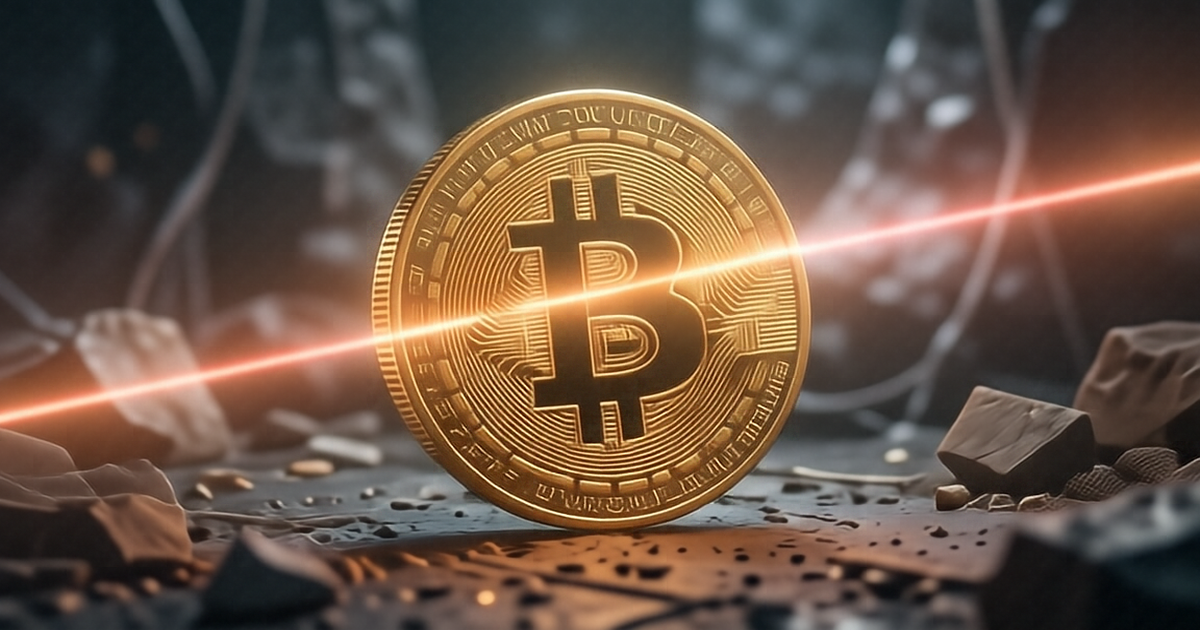
    Every four years, something happens in Bitcoin that makes headlines and sets the whole market talking: the halving. It is not a company announcement or a government decision — it is a rule written into the code from day one. Understanding it explains how new bitcoins are created, why supply is limited and why the event matters so much to investors.

    What is the halving

    The halving is an event that cuts the reward miners receive for adding a new block in half. When Bitcoin launched in 2009, each block paid 50 bitcoins. Since then the reward has halved several times: 25, then 12.5, then 6.25, then 3.125. The next halvings will keep reducing it until the reward reaches zero.

    The event happens automatically every 210,000 blocks — roughly every four years. It is not decided by anyone; it is a condition written into the protocol that no developer can change without the entire network agreeing.

    Why it exists

    The halving is what gives Bitcoin its scarcity. The total supply is capped at 21 million coins, and the halving is the mechanism that enforces that cap gradually.

    Think of it as a schedule: the reward decreases over time so that new coins enter circulation slower and slower, until the last bitcoin is mined around the year 2140. After that, miners will be paid only with transaction fees, and the supply will be permanently fixed.

    This design makes Bitcoin the opposite of fiat money: no central bank can print more of it, and everyone can verify the issuance schedule. That predictability is a core part of its value proposition.

    How it affects miners

    Miners are the ones who feel the halving directly: their income in newly created bitcoins drops by half overnight. That is why the event often pushes less efficient miners out of the market, and why the industry becomes more professional after each halving.

    In practice, miners compensate in two ways: transaction fees (which become a bigger share of their income over time) and, in the long run, the price of bitcoin (if demand stays, a scarcer asset can be worth more per unit). It is a survival test that the network has passed several times.

    Does the halving affect the price?

    The halving is the most anticipated event in the crypto calendar, and history shows a pattern: in previous cycles, the months after each halving have been followed by significant price increases. But correlation is not causation, and past performance is no guarantee.

    What is certain is the supply side: after each halving, the rate of new bitcoins entering the market drops. If demand stays the same or grows, basic economics says the price pressure is upward. What is uncertain is everything else: regulation, macroeconomics, competition and market sentiment can all overwhelm the supply effect.

    The honest summary: the halving reduces supply growth — that is a fact. Whether the price follows is a bet, not a guarantee.

    Common misunderstandings

    • “The halving makes bitcoin more valuable overnight”: no. It reduces the flow of new supply; the price reaction, if any, plays out over months.
    • “The halving is a bubble that will burst”: it is a technical event, not a market event. The market’s reaction is what can be volatile.
    • “After the halving, mining ends”: no. Mining continues; only the reward in new coins decreases.
    • “There will be more than 21 million bitcoins”: no. The cap is absolute and enforced by the protocol.

    FAQ

    When is the next Bitcoin halving?

    Halvings happen roughly every four years. The most recent ones occurred in 2020 and 2024, so the next one is expected around 2028.

    How many halvings are left?

    Around eight. The reward will keep halving until it becomes so small that it rounds to zero, which happens around the year 2140.

    Does the halving affect Ethereum?

    No. Ethereum does not have halvings; it has its own issuance rules, based on proof of stake since 2022.

    Is Bitcoin scarce because of the halving?

    Yes. The halving is the mechanism that enforces the 21 million cap, making Bitcoin’s supply predictable and verifiable by anyone.

    Should I buy bitcoin because of the halving?

    That is a personal decision, not financial advice. The halving is a supply event, not a guarantee of profit. Only invest money you can afford to lose.

    Want to understand the bigger picture? Read what Bitcoin is and why it has value, or how mining actually works on the network.

    Further reading

    Disclaimer: this content is for educational purposes only and does not constitute financial advice. Cryptocurrencies are volatile assets; only invest money you can afford to lose.

  • What is staking: how it works, risks and how it differs from mining

    What is staking: how it works, risks and how it differs from mining

    They tell you that you can “park” your crypto and earn interest without doing anything. It sounds free, and that is exactly where the problem starts: staking is not a bank deposit, it is a way of participating in how a blockchain network operates in exchange for a reward. Understanding what happens to your money while it is “parked” is the difference between an informed decision and a nasty surprise.

    What is staking

    Staking is the security mechanism of networks that use proof of stake. Instead of spending electricity competing to solve calculations (as Bitcoin does), participants lock up their cryptocurrency as a guarantee. In exchange for that lock-up, the network pays them rewards and gives them the right to validate transactions.

    The logic is simple: if your money is locked in the network, you want the network to work well. If you try to validate fraudulent transactions, the network penalizes you by taking part of what you locked (this is the famous slashing). The validator’s self-interest is aligned with the health of the network.

    Ethereum is the largest network using this system since its 2022 upgrade, but it is not the only one: other networks including Solana, Cardano and Polkadot use variants with different delegation, lock-up and penalty rules.

    How it works in practice

    1. You lock up your tokens: you deposit them in a validator, either your own or a shared one (staking pool).
    2. The network freezes them: you cannot spend them while they are staked. On some networks, unlocking takes days or weeks.
    3. The validator works: it proposes and confirms blocks, earning rewards.
    4. You get your share: the reward is distributed among those who contributed tokens, minus the validator’s commission.

    Returns are expressed as an annual percentage (APY) and depend on the network and on how many people are staking: the more validators, the lower the reward per participant. On Ethereum it is in the low single digits; on smaller networks it can be higher, with more risk.

    Direct staking vs exchange staking

    • Direct staking: you control your tokens and lock them on the network. It requires more technical knowledge and, on networks like Ethereum, a high minimum (though pools solve that).
    • Exchange staking: the platform does everything for you. More convenient, but your tokens are in the platform’s hands: if it goes bankrupt or freezes withdrawals, that is your problem.
    • Liquid staking: you receive a token representing your position that you can use while your original money stays locked. Useful, but it adds layers of complexity and risk.

    Risks almost nobody mentions

    • The price can fall: rewards are paid in the cryptocurrency itself. A price decline can exceed the rewards. Calculate total returns in euros or dollars, including fees, not just the number of tokens.
    • Locked funds: you cannot sell when you want. In moments of panic, exiting can take weeks.
    • Slashing: specific protocol violations can destroy part of the stake. On Ethereum, ordinary downtime causes inactivity penalties, not necessarily slashing. Rules depend on the network.
    • Platform risk: on exchanges, your staking is only as good as the platform’s solvency.
    • Network risk: a bug or an attack on the network can devalue the whole system.

    Staking vs mining

    Mining (proof of work) and staking (proof of stake) are two ways of achieving the same thing: a secure network without a central authority. Mining spends electricity and requires hardware; staking locks capital and requires trust in the code. Mining is theoretically more decentralized (anyone can set up a miner), but in practice it is dominated by industrial farms. Staking is more accessible for the average user, but concentrates power in those with the most tokens.

    For the investor, the practical difference is this: mining is a hardware and electricity business; staking is an investment decision with locked capital.

    FAQ

    Is staking safe?

    The network can be secure and you can still lose money: through price drops, validator slashing or platform problems. Technical security is not the same as a guaranteed return.

    How much can you earn staking?

    It depends on the network and the moment. On Ethereum, low single digits annually; on smaller networks, more, with much more risk. No figure is guaranteed.

    Can I withdraw my tokens whenever I want?

    No. By staking you accept a lock-up period. On Ethereum, exiting can take days or weeks.

    Do I need a minimum amount of tokens?

    To validate directly on Ethereum you need 32 ETH, but pools let you participate with small amounts. Only stake money you do not need in the short term.

    What is slashing?

    A penalty for specific consensus violations, such as signing conflicting messages. It is distinct from ordinary inactivity penalties. It can cost you part of your locked capital even if you only contributed tokens.

    Want to understand the ecosystem where staking lives? Read what Ethereum is and how smart contracts work, or how to choose a crypto wallet to store your tokens safely.

    Further reading

    Disclaimer: this content is for educational purposes only and does not constitute financial advice. Cryptocurrencies are volatile assets; only invest money you can afford to lose.
  • What is DeFi: decentralized finance explained for beginners

    What is DeFi: decentralized finance explained for beginners

    Imagine borrowing money, earning interest or trading currencies without a bank in the middle. That is the promise of DeFi, decentralized finance: financial services built on blockchains, run by code instead of companies. It is one of the most important ideas in crypto — and one of the most misunderstood. Here is how it actually works.

    What is DeFi

    DeFi is the ecosystem of financial applications built on blockchain networks, mainly Ethereum. Instead of a bank holding your money and managing the rules, everything runs on smart contracts: programs that execute automatically and are visible to anyone.

    The result is a financial system with no intermediaries: no branch, no approval process, no opening hours. Anyone with an internet connection can lend, borrow, trade or save, regardless of their country, credit history or income. That accessibility is the core of the idea.

    The building blocks

    • Stablecoins: cryptocurrencies designed to always be worth 1 dollar. They are the fuel of DeFi: a way to move value without the volatility of Bitcoin.
    • Decentralized exchanges (DEX): platforms where you trade tokens directly against other users, without a company matching orders. You keep control of your funds until the trade executes.
    • Lending protocols: you deposit crypto and earn interest, or deposit collateral and borrow against it. Interest rates are set by supply and demand, not by a bank.
    • Yield farming: moving funds between protocols to earn rewards. It can be profitable, but it is also one of the riskiest activities in crypto.

    How a DeFi loan works

    A typical loan works like this: you deposit crypto as collateral, and the protocol lets you borrow stablecoins up to a percentage of that collateral (for example 75%). If the value of your collateral drops below the required level, the protocol automatically liquidates it to protect lenders.

    There is no credit check: the collateral is the guarantee. That is the beauty and the trap — liquidation can happen in seconds during a crash, and many people have lost their collateral that way.

    The benefits

    • No permission: no bank account, no approval, no country restrictions.
    • Transparency: every transaction and every rule is public. You can verify exactly how a protocol works.
    • Speed and automation: loans, trades and interest are settled automatically, without paperwork.
    • Global access: DeFi works the same in Barcelona as in Buenos Aires or Lagos.

    The risks

    • Smart contract bugs: the code can have flaws, and a flaw can mean losing real money. Audits help but do not guarantee safety.
    • Hacks: billions of dollars have been stolen from DeFi protocols since the industry began. It is a young industry with a painful history.
    • Liquidation risk: in lending, a sudden price drop can liquidate your collateral automatically.
    • Volatility: the assets involved can swing violently, and yield that looks amazing can disappear overnight.
    • Regulatory uncertainty: DeFi operates in a legal gray area in many countries, and rules are still being written.

    Is DeFi for you?

    DeFi is not a get-rich-quick scheme, and it is not for everyone. It makes sense if you understand blockchains, if you are comfortable with technical tools, and if you only risk money you can afford to lose. If you are a beginner, the sensible path is: learn how wallets and stablecoins work first, use small amounts, and never invest in a protocol you do not understand.

    FAQ

    Is DeFi legal?

    It depends on the country. Using DeFi is not illegal in most places, but regulation is evolving and some activities (like unregistered lending) are being scrutinized. Check the rules in your country.

    Do I need to verify my identity to use DeFi?

    No. That is the point: no account, no KYC. You interact directly with the protocols using your wallet.

    Can I lose more than I invest?

    Generally no, but you can lose a large part of your deposit through liquidation, hacks or price crashes. Never borrow more than you can handle.

    What is the difference between DeFi and traditional finance?

    In traditional finance, a company or bank holds your money and sets the rules. In DeFi, code holds the money and the rules are public and automatic. Both have risks; they are just different kinds.

    How do I start using DeFi?

    With a wallet, some crypto and a regulated exchange to buy it. Then move small amounts to a trusted protocol and learn by doing — carefully.

    Want the foundation first? Read what Ethereum is and how smart contracts work, or how to choose a crypto wallet.

    A note on stablecoins

    They aim to track a reference value but can lose their peg. Reserve, issuer, liquidity and contract risks remain; they are not equivalent to an insured bank deposit.

    Further reading

    Disclaimer: this content is for educational purposes only and does not constitute financial advice. Cryptocurrencies are volatile assets; only invest money you can afford to lose.

  • What is an altcoin: types, risks and examples explained

    What is an altcoin: types, risks and examples explained

    Bitcoin is not alone. Since its creation, thousands of cryptocurrencies have appeared with very different promises: smart contracts, faster payments, dollar-pegged stablecoins or memes with a market cap. All of them are called altcoins, and understanding what they are — and especially what they are not — is the first step to avoiding projects you do not understand.

    What is an altcoin

    An altcoin is any cryptocurrency that is not Bitcoin. The name comes from “alternative coin”. The first one appeared in 2011 (Namecoin), and tens of thousands have been launched since — although the vast majority have no real use or liquidity.

    The label matters less than the difference underneath: Bitcoin was created as decentralized digital money and has not changed its purpose. Altcoins, in contrast, usually launch with their own thesis: an application platform, a payment system, a stable asset or simply speculation. Each one is an experiment with its own team, its own network and its own risk.

    Types of altcoins

    • Smart contract platforms: the most relevant category after Bitcoin. Ethereum is the classic example; Solana and other networks compete to be faster or cheaper. They are not just coins: they are platforms where decentralized applications run.
    • Stablecoins: cryptocurrencies designed to always be worth the same (usually 1 dollar). USDT and USDC are the most used. They do not seek to rise in value, but to serve as a bridge: moving money into crypto without Bitcoin’s volatility.
    • Memecoins: born from memes or internet culture, with no differentiating technology. They can rise a lot in a short time and fall just as fast. Pure speculation.
    • Utility and governance tokens: they give access to a service within their ecosystem or voting rights over its development. Their value depends on the project having real use.

    What they are for

    Altcoins expand what can be done with blockchain. With Ethereum and similar networks you can create automatic loans, markets, digital identity or stablecoins without a bank. Stablecoins let you move value between exchanges in seconds without relying on traditional banking. And memecoins, let us be honest, exist mostly for speculation.

    That variety is the argument in favor: not all altcoins are “Bitcoin with another name” — some solve problems Bitcoin does not address. The argument against is equally valid: most solve nothing and exist only to capture money from retail investors.

    Main risks

    • Extreme volatility: an altcoin can rise 10x in a month and lose 90% in another. That is normal, not exceptional.
    • Projects that disappear: without real revenue, many projects are abandoned or turn out to be scams (rug pulls). The team can vanish with the liquidity.
    • Low liquidity: in small projects, selling large amounts can be impossible without crashing the price.
    • Regulation: most altcoins have no clear legal status; a regulatory change can remove them from exchanges.
    • Technical complexity: each network has its own rules, wallets and risks (buggy contracts, hacked bridges). More attack surface than Bitcoin.

    How to evaluate an altcoin before investing

    • Does it have real use? Is anyone using it for something other than buying and selling it?
    • Who is behind it? A public team with a track record, or anonymous founders with big promises?
    • How long has it existed? Established projects survive cycles; new ones do not.
    • Where is it listed? Being on major exchanges is a minimum filter, not a guarantee.
    • How much can you afford to lose? If the answer is not “everything I put in”, you are taking more risk than you think.

    FAQ

    Are all cryptocurrencies that are not Bitcoin altcoins?

    Yes, by definition. That includes Ethereum, stablecoins and memecoins. It is a broad label grouping very different projects.

    Can an altcoin overtake Bitcoin?

    In price, some have done so at certain moments. In relevance and network security, none come close: Bitcoin has over a decade as the largest and most resilient network.

    Are stablecoins an investment?

    Not in the traditional sense: their price does not rise. They are for stability and transfers, not appreciation.

    What is a rug pull?

    When a project’s creators withdraw all the liquidity and disappear with investors’ money. A common scam in small, unaudited projects.

    Is it better to invest only in Bitcoin?

    For most people, yes: less risk, fewer decisions, less attack surface. Altcoins are higher-risk bets that only make sense with money you can lose and after understanding each project.

    Want to understand the difference with the original cryptocurrency? Read what Bitcoin is and how it works from scratch, or compare Bitcoin vs Ethereum to see two different blockchain philosophies.

    A note on stablecoins

    They aim to track a reference value but can lose their peg. Reserve, issuer, liquidity and contract risks remain; they are not equivalent to an insured bank deposit.

    Further reading

    Disclaimer: this content is for educational purposes only and does not constitute financial advice. Cryptocurrencies are volatile assets; only invest money you can afford to lose.